Briefly describe the development trends of printed circuit boards
Date: 2026-09-05
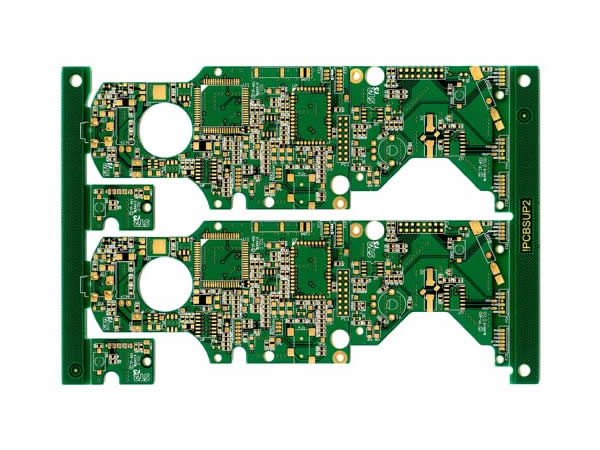
On the insulating substrate, conductor patterns are printed using the printing method to form the electrical interconnection lines. In early electronic devices, electronic and electromechanical components were mounted on metal sheets as the base, and electrical interconnections were achieved through wires. After World War II, with the development of printed circuit technology, electronic and electromechanical components were mounted on printed circuit boards to form a component, and electronic devices, especially electronic computers, gradually formed a structural system based on this component. Its advantages are good electrical performance, high reliability, small size, low cost, and the ability to achieve automated production. The printing methods for conductor patterns on the board can generally be divided into the reduction method (etching method) and the addition method. The reduction method is to etch away the unnecessary copper foil on the insulating substrate to form the conductor pattern; the addition method is to form the conductor pattern on the insulating substrate using chemical deposition or other means combined with chemical deposition.
Printed circuit boards can be classified by the number of layers:
① Single-sided board: There are printed conductor patterns on one side of the board.
② Double-sided board: There are printed conductor patterns on both sides of the board.
③ Multi-layer board: There are printed conductor patterns on 3 or more layers of the board, and the layers are bonded with insulating materials and the inter-layer electrical interconnection is completed through metallized holes. The number of layers indicates the density of interconnection.
Large computers and electronic systems often use multi-layer boards (with up to 30 or more layers), while general electronic devices use single-sided or double-sided boards. The development of printed circuit board technology is trending to combine with modern electronic device microelectronic assembly technology.



 Follow Us
 +86 13088807439
  E-mail