
Industries
Date: 2026-09-02
1、 Application scenarios
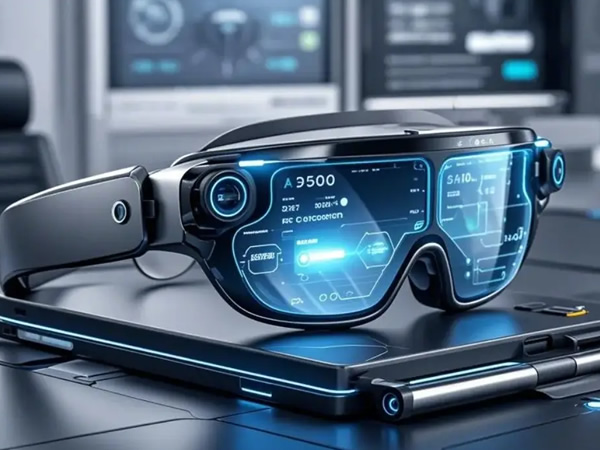
Consumer electronics PCBs account for over 30% of the overall market share in the PCB industry. It is currently the largest field in the PCB industry. PCB has a wide range of applications in the field of consumer electronics. The following are the applications of PCB boards in the field of consumer electronics: personal communication, such as mobile phones, walkie talkies, fixed telephones, as well as mobile phone peripheral accessories, such as power banks, USB data cables, chargers, mobile phone battery protection boards, camera COMS modules, and IC carrier boards for chip packaging, all of which require PCB boards; Personal computers, desktops, and laptops: motherboards, monitors, chargers, graphics cards, and computer peripherals such as SSDs, USB drives, etc; Traditional household appliances such as washing machines, dishwashers, microwaves, televisions, set-top boxes, refrigerators, etc; Personal wearable devices such as Bluetooth earphones, Bluetooth speakers, VR/AR glasses, electronic wristbands, electronic watches, etc; There are also devices such as cameras, game consoles, various toys, routers, rectifiers, remote controls, lighting fixtures, and more Almost all the consumer electronics products we need to come into contact with require the use of PCB boards.
At present, the company's PCB board also covers various applications in the consumer electronics field, such as routers, Bluetooth earphones, walkie talkies, Bluetooth modules, VR glasses, AR devices, display screens, network cards, washing machines, air conditioners, etc.


2、 Difficulties in control
Consumer electronics PCBs have a wide range of applications, so the difficulty span is also very large. For example, ordinary consumer products such as small household appliances have relatively low PCB difficulty and product requirements. IC carrier boards for mobile phone chips and camera COMS boards are extremely difficult to produce and require specialized customized production lines. Currently, we do not have this production capacity. For example, metal edging boards for Bluetooth earphones, half hole module boards for Bluetooth modules, battery protection boards for mobile phones and other products, and gold finger card boards for graphics cards. These types of circuit boards are much more difficult compared to ordinary consumer PCBs, but relatively easier than chip level circuit boards. The following difficulties are mainly controlled for these types of consumer electronic circuit boards:
Consumer electronics PCBs have a wide range of applications, so the difficulty span is also very large. For example, ordinary consumer products such as small household appliances have relatively low PCB difficulty and product requirements. IC carrier boards for mobile phone chips and camera COMS boards are extremely difficult to produce and require specialized customized production lines. Currently, we do not have this production capacity. For example, metal edging boards for Bluetooth earphones, half hole module boards for Bluetooth modules, battery protection boards for mobile phones and other products, and gold finger card boards for graphics cards. These types of circuit boards are much more difficult compared to ordinary consumer PCBs, but relatively easier than chip level circuit boards. The following difficulties are mainly controlled for these types of consumer electronic circuit boards:
1. Material selection: It is easy to produce layer deviation phenomenon during production or CAF phenomenon during use. Therefore, it is necessary to choose CAF resistant and medium to high TG value plates and PP sheets to ensure their stability, avoid ion migration, or deformation of the circuit board caused by high temperature.
2. Fine wiring and drilling: Due to the need to be lightweight and compact, consumer electronic products often have densely packed wiring layouts with small minimum hole diameters (0.15mm) and high hole densities, which can lead to many difficulties in the production process, such as layer deviation during lamination, resulting in the entire batch being scrapped; During the etching process, or when the board is transported, there may be short circuits or gaps in the circuit. During the drilling process, problems such as hole deviation and broken drill needles may occur.
3. Mixed color ink: Consumer boards have a fast update cycle and unstable demand, which can lead to a large number of small and medium batches of consumer boards. The ink colors are varied, such as black, white, blue, red ink, etc. Among them, black and white ink have physical properties, which can easily cause solder bridges to fall off or develop uncleanly when making fine solder bridges or small solder windows.
4. Impedance control: Due to the large proportion of consumer boards with multiple sets of differential impedances, high signal requirements are required. The following points need to be controlled: etching of circuit boards, and the etching accuracy should be well controlled; At the same time, it is necessary to control the uniformity of electroplating; Pressing requires careful control of details, such as controlling the amount of glue overflow and alignment progress.
5. Special processes: Consumer electronics products have a wide range of products, resulting in many special processes such as half hole plates, metal edge plates, resin plug holes, copper paste/copper paste plug holes, HDI plates, mechanical blind buried holes, gold finger card plates, as well as some unconventional surface treatment processes such as electroplating, tin deposition, silver deposition, nickel palladium gold, chemical selection, blue glue, etc. Put forward certain requirements for the technical reserves of circuit board factories.
How is the company managed and controlled?
Consumer electronics PCBs have a wide range of applications, so the difficulty span is also very large. For example, ordinary consumer products such as small household appliances have relatively low PCB difficulty and product requirements. IC carrier boards for mobile phone chips and camera COMS boards are extremely difficult to produce and require specialized customized production lines. Currently, we do not have this production capacity. For example, metal edging boards for Bluetooth earphones, half hole module boards for Bluetooth modules, battery protection boards for mobile phones and other products, and gold finger card boards for graphics cards. These types of circuit boards are much more difficult compared to ordinary consumer PCBs, but relatively easier than chip level circuit boards. The following difficulties are mainly controlled for these types of consumer electronic circuit boards:
1. Material selection: It is easy to produce layer deviation phenomenon during production or CAF phenomenon during use. Therefore, it is necessary to choose CAF resistant and medium to high TG value plates and PP sheets to ensure their stability, avoid ion migration, or deformation of the circuit board caused by high temperature.
2. Fine wiring and drilling: Due to the need to be lightweight and compact, consumer electronic products often have densely packed wiring layouts with small minimum hole diameters (0.15mm) and high hole densities, which can lead to many difficulties in the production process, such as layer deviation during lamination, resulting in the entire batch being scrapped; During the etching process, or when the board is transported, there may be short circuits or gaps in the circuit. During the drilling process, problems such as hole deviation and broken drill needles may occur.
3. Mixed color ink: Consumer boards have a fast update cycle and unstable demand, which can lead to a large number of small and medium batches of consumer boards. The ink colors are varied, such as black, white, blue, red ink, etc. Among them, black and white ink have physical properties, which can easily cause solder bridges to fall off or develop uncleanly when making fine solder bridges or small solder windows.
4. Impedance control: Due to the large proportion of consumer boards with multiple sets of differential impedances, high signal requirements are required. The following points need to be controlled: etching of circuit boards, and the etching accuracy should be well controlled; At the same time, it is necessary to control the uniformity of electroplating; Pressing requires careful control of details, such as controlling the amount of glue overflow and alignment progress.
5. Special processes: Consumer electronics products have a wide range of products, resulting in many special processes such as half hole plates, metal edge plates, resin plug holes, copper paste/copper paste plug holes, HDI plates, mechanical blind buried holes, gold finger card plates, as well as some unconventional surface treatment processes such as electroplating, tin deposition, silver deposition, nickel palladium gold, chemical selection, blue glue, etc. Put forward certain requirements for the technical reserves of circuit board factories.

3、 What consumer electronics customers do we have?
With a profound understanding of consumer electronics technology, stable quality, and flexible delivery times, we have gained the trust of many customers in the consumer electronics field. Here is a list of some of our consumer electronics customers:

4、 Future improvement direction
The updating speed of consumer electronics products is very fast, and the application of new technologies is constantly emerging. This brings new opportunities and challenges to circuit board manufacturers. Overall, consumer electronics products are moving towards being more intelligent, smaller in size, more integrated in functionality, faster in operation, and more environmentally friendly. Corresponding to the circuit board, it requires a higher number of layers, HDI conversion, software and hardware integration, denser circuits, higher halogen requirements, and faster delivery speed.
|
field |
project |
Process capability (now) |
Process capability (future) |
|
consumer electronics |
number of layers |
Sample 36 layers, batch 26 layers |
Batch of 36 layers, sample size above 48 |
| Line width/line spacing | ≥3mil/3mil | ≥2mil/2mil | |
| Line etching tolerance | ±10% / ±1.5mil | Can meet future needs | |
| Inter layer alignment accuracy | ≥2.5mil | ≥1.5mil | |
| Impedance control | ≥±10% | ≥±5% | |
| HDI order | 2nd order HDI | 3rd order HDI, arbitrary order HDI | |
| halogen | Can meet halogen-free requirements (<900PPM) | Lower halogen PPM content |


 Follow Us
 +86 13088807439
  E-mail