
Industries
Date: 2026-09-02
1、 Application scenarios
PCB boards are widely used in the field of industrial control and are one of the core components. Industrial circuit boards have three main characteristics: high reliability. As a part of industrial applications, industrial electronic circuit boards usually require long-term and uninterrupted operation, so reliability is crucial. High stability: Industrial circuit boards have high stability and can work in various harsh environments while maintaining long-term stability. Large size and high number of layers: Industrial boards are usually larger in size and have relatively more layers due to their wide industrial applications, such as stage or large equipment control boards, which may exceed 1.5 meters in size. For example, ATE test circuit boards involving chip level testing may have more than 100 layers.
The following are the main application areas and specific scenarios of PCB boards in industrial control:
PLC (Programmable Logic Controller): PCB is used for the main control board, I/O modules, and communication modules to process logic operations, signal acquisition, and transmission. It requires multi-layer boards (4-8 layers) and anti-interference design (such as shielding layers).
Servo drivers and frequency converters: High power PCBs need to support high currents (2-8 oz copper thickness), heat dissipation design (metal substrate or thick copper heat dissipation layer), and integrate IGBT/MOSFET driver circuits.
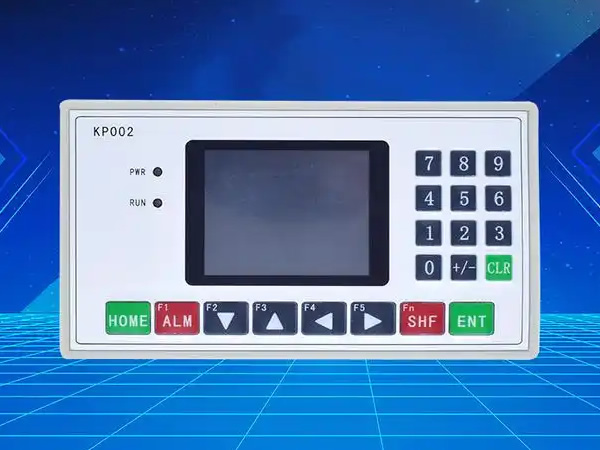
Human Machine Interface (HMI): The touch screen driver board (4-8 layer through-hole) and communication board require high-density interconnection (HDI PCB) and EMI protection.
In addition, there are various types of sensors, controller boards, testing equipment, industrial cameras, industrial computers, industrial motors, CNC equipment, AGV equipment, etc. that require PCB boards.


2、 Difficulties in control
Industrial control circuit boards require extremely high reliability and stability due to their complex application scenarios and harsh environments. Their full lifecycle management needs to consider multiple aspects such as design, manufacturing, testing, and maintenance. Their main characteristics are reflected in PCB production and manufacturing, which require the following controls:
1. Material selection: It is necessary to choose medium Tg (such as Tg ≥ 150 ℃) and high Tg sheet materials (such as Tg ≥ 170 ℃), as well as semi cured sheets (PP). Avoid deformation of the circuit board during long-term operation in high temperature environments, which may lead to functional failure.
2. Electroplating: It is necessary to strictly follow the customer's requirements to ensure the copper plating thickness of the surface copper and hole copper. In addition, the uniformity of electroplating has a significant impact on the circuit signal and needs to be carefully controlled.
3. Compression: Compression mainly involves three aspects: firstly, due to the large amount of high TG materials in industrial control boards, it is necessary to accurately control the heating rate to avoid uneven resin curing leading to inner cavity; Secondly, due to the large size of some industrial control PCB boards, the inner core board is prone to scratches during the pressing process, and the cleanliness of the pressing chamber does not meet the standard, resulting in foreign objects or excessive water vapor, which can easily lead to delamination and board explosion; The third is to control the alignment accuracy between the laminated layers and avoid the occurrence of open and short circuits.
4. Signal integrity: Due to the fact that industrial control boards typically have multiple sets of differential impedances, high requirements are placed on the signal aspect. The following points need to be controlled: etching of circuit boards, and the etching accuracy should be well controlled; As mentioned earlier, it is important to control the uniformity of electroplating; Pressing requires controlling the details, controlling the amount of excess glue, and ensuring proper alignment.
How is the company managed and controlled?
We obtained IS9001, ISO14001, UL and other certifications as early as 2006, and TS16949 certification in 2008. With 5 management tools as the basic requirements, we have established a strict quality management system to ensure that there are no functional issues or defects. The following are our company's control measures:
In terms of materials, we use domestic and international first-line brands such as KB, Shengyi, and Taiwan South Asia for our copper-clad laminates. The TG value starts at 150 ℃ and the material is resistant to CAF. Copper foil, copper balls, ink, dry film and other materials are also made from top domestic and foreign brands. Ensure quality from the source.
In terms of manufacturing, we use the positive plate process for the electroplating process to avoid the occurrence of copper free holes; In terms of electroplating uniformity, we regularly conduct carbon treatment and uniformity testing. When producing industrial control boards, we adopt the method of low current slow copper plating time to maximize the uniformity of electroplating; In terms of lamination, our lamination equipment is a high-temperature press machine from Taiwan Huoquan. The maximum problem can reach 280 ℃, and the temperature difference can reach 1 ℃. This can avoid the problem of insufficient stability of high TG value sheet materials during lamination, which may cause voids. It can also control the overflow amount to improve the interlayer alignment accuracy.


3、 What industrial control customers do we have?
With a profound technical understanding of the industrial control field, stable quality, and flexible delivery times, we have gained the trust of many customers in the industrial control field. Here is a list of some of our industrial control customers:


4、 Future improvement direction
The essential difficulty in controlling industrial control circuit boards lies in balancing reliability, consistency, and environmental adaptability. With the continued promotion of Industry 4.0, intelligent manufacturing and digital management will inject new vitality into the field of industrial control, but also bring new requirements to PCB board production and manufacturing. The following is our technical plan in this field:
|
field |
project |
Process capability (now) |
Process capability (future) |
|
industrial control |
number of layers |
Sample 36 layers, batch 26 layers |
48 layers of samples, 36 layers for mass production |
| copper thickness | Sample 8OZ, mass-produced 3OZ | Sample 8OZ, mass production 5OZ | |
| Uniformity of electroplating | COV≤10% | COV≤5% | |
| Line etching tolerance | ±10% / ±1.5mil | Can meet future needs | |
| Inter layer alignment accuracy | ≥2.0mil | ≥1.5mil | |
| Impedance control | ≥±10% | ≥±5% |



 Follow Us
 +86 13088807439
  E-mail